

Can a yarn winding machine be used for specialty yarns?
In the textile industry, the demand for specialty yarns has been on the rise. Specialty yarns, with their unique properties and appearances, are used in a wide range of applications from high - end fashion to technical textiles. As a yarn winding machine supplier, I often get asked whether our machines can handle these specialty yarns. In this blog, I will explore this question in detail.
Understanding Specialty Yarns
Specialty yarns are characterized by their distinct features. They can be made from various materials such as natural fibers like silk, wool, and cotton, as well as synthetic fibers like polyester, nylon, and acrylic. These yarns may have special textures, colors, or structures. For example, slub yarns have irregular thick and thin sections, bouclé yarns have loops, and metallic yarns contain shiny metallic elements.

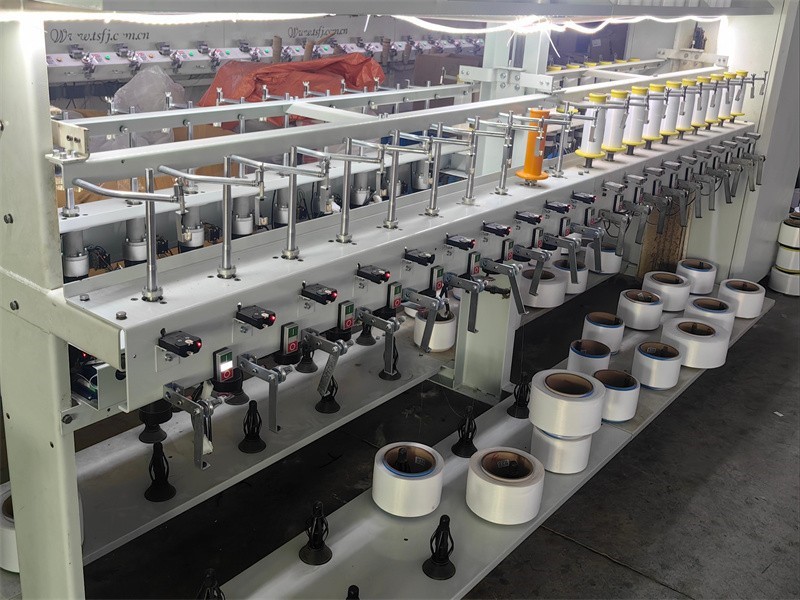
The properties of specialty yarns pose unique challenges compared to regular yarns. Their irregularities can make them more difficult to wind. For instance, slub yarns' thick and thin parts may cause tension variations during winding, and bouclé yarns' loops can get caught in the winding mechanism.
Capabilities of Yarn Winding Machines
Our company offers a variety of yarn winding machines, including the Automatic Yarn Winding Machine, Cop Winding Machine, and Automatic Cone Winding Machine. These machines are designed with advanced technology to handle different types of yarns, including specialty ones.
Tension Control
One of the key features of our yarn winding machines is precise tension control. Tension is crucial when winding specialty yarns. For example, in the case of slub yarns, the machine can adjust the tension according to the thickness of the yarn at different points. Our machines use sensors to detect the tension and make real - time adjustments, ensuring that the yarn is wound evenly without breakage.
Adaptable Winding Speeds
Specialty yarns often require different winding speeds compared to regular yarns. Some specialty yarns, like those with delicate structures, need to be wound at a slower speed to prevent damage. Our machines are equipped with adjustable speed settings. Operators can easily set the appropriate speed based on the type of specialty yarn being wound. For example, when winding metallic yarns, a slower speed can be selected to avoid damage to the metallic elements.
Compatibility with Different Yarn Structures
Our winding machines are designed to accommodate various yarn structures. For bouclé yarns, the machine's guide mechanisms are designed to prevent the loops from getting tangled. The winding path is carefully engineered to ensure that the loops pass through smoothly. Similarly, for yarns with complex textures, the machine can handle the irregularities without causing jams or breakages.
Case Studies
Let's look at some real - world examples of how our yarn winding machines have been used for specialty yarns.
Case 1: Silk Slub Yarn
A customer who produces high - end silk slub yarns approached us. The slub yarns had significant variations in thickness, which made traditional winding methods difficult. Our Automatic Cone Winding Machine was able to handle the silk slub yarns effectively. The tension control system adjusted the tension based on the thickness of the slub, and the adjustable speed allowed for a slow and steady winding process. As a result, the customer was able to wind the silk slub yarns without any breakages, and the wound cones had a uniform appearance.
Case 2: Metallic Yarn
Another customer dealing with metallic yarns faced challenges in winding due to the delicate nature of the metallic elements. Our Cop Winding Machine was used to wind the metallic yarns. The machine's slow - speed setting and gentle handling ensured that the metallic elements were not damaged during the winding process. The customer was satisfied with the quality of the wound cop, which was suitable for further processing in their textile production.
Limitations and Considerations
While our yarn winding machines are capable of handling a wide range of specialty yarns, there are some limitations. Some extremely delicate or highly irregular specialty yarns may still pose challenges. For example, yarns with very large and complex loops or those with extremely fragile materials may require additional customization or special handling.
It is also important to note that proper maintenance of the winding machines is crucial when working with specialty yarns. Regular cleaning and calibration of the machines can ensure optimal performance and prevent issues such as yarn breakage or uneven winding.
Conclusion
In conclusion, our yarn winding machines can be effectively used for specialty yarns. With features such as precise tension control, adaptable winding speeds, and compatibility with different yarn structures, our machines can handle the unique challenges posed by specialty yarns. However, it is important to consider the specific characteristics of each specialty yarn and make appropriate adjustments.
If you are in the business of producing or using specialty yarns and are looking for a reliable yarn winding solution, we are here to help. Our team of experts can provide you with detailed information about our machines and how they can be customized to meet your specific needs. Contact us to start a discussion about your yarn winding requirements.
References
- Textile Machinery Handbook, 3rd Edition
- Journal of Textile Science and Technology, Vol. 15, Issue 2
- Proceedings of the International Textile Machinery Conference, 2022