

Hey there! I'm a supplier of Fancy Tops Machines, and I often get asked this question: "How long does it take to make a fancy top with a Fancy Tops Machine?" Well, let's dive right into it and break down the factors that affect the production time.
First off, what's a Fancy Tops Machine? It's a pretty cool piece of equipment used in the yarn - making industry. You can check out more about it here. This machine is designed to create fancy tops, which are basically high - quality fiber bundles that can be used for various textile applications.
Machine Speed
One of the most significant factors that determine how long it takes to make a fancy top is the speed of the Fancy Tops Machine. Different models have different maximum speeds. Some of the newer, high - end machines can operate at incredibly fast rates, processing a large amount of fiber in a short time. For example, a top - of - the - line Fancy Tops Machine might be able to process 100 kilograms of fiber per hour. On the other hand, older or more basic models could have a much slower processing speed, maybe around 20 - 30 kilograms per hour.
Let's say you're making a fancy top that requires 5 kilograms of fiber. If you're using a high - speed machine that processes 100 kilograms per hour, it'll take you about 3 minutes (since 5/100 = 0.05 hours, and 0.05 * 60 = 3 minutes). But if you're using a slower machine that processes 20 kilograms per hour, it'll take you 15 minutes (5/20 = 0.25 hours, and 0.25 * 60 = 15 minutes).
Fiber Type
The type of fiber you're using also plays a huge role. Different fibers have different characteristics, such as length, fineness, and strength. For instance, natural fibers like cotton and wool can be a bit more challenging to process compared to synthetic fibers. Cotton fibers can be short and have a tendency to clump together, which might slow down the machine as it has to work harder to separate and align them. Wool fibers, on the other hand, can be quite curly and have a lot of natural oils, which can also cause some processing difficulties.
Synthetic fibers, like polyester or nylon, are generally easier to process. They're more uniform in length and don't have the natural impurities that natural fibers do. So, if you're using synthetic fibers, the Fancy Tops Machine can usually work faster, reducing the overall production time.
Complexity of the Design
The design of the fancy top you want to make matters too. A simple, plain fancy top will take less time to produce than one with a complex pattern or multiple colors. If you're making a fancy top with a single color and a basic texture, the machine can operate in a straightforward manner. But if you're aiming for a multi - colored, striped, or patterned fancy top, the machine has to perform additional steps. It might need to switch between different fiber feeds or adjust the processing parameters at different intervals.
For example, a basic single - color fancy top might take 10 minutes to make on a medium - speed machine. But a multi - colored, intricately patterned fancy top could take 30 minutes or more, depending on the complexity of the design.
Operator Skill
The skill level of the machine operator can't be overlooked. An experienced operator who knows how to optimize the machine settings, troubleshoot problems quickly, and keep the production process running smoothly can significantly reduce the production time. They'll be able to load the fiber efficiently, adjust the machine speed and tension as needed, and handle any minor glitches without causing long delays.
On the contrary, a novice operator might take longer to set up the machine, make more mistakes, and have a harder time dealing with unexpected issues. This can lead to longer production times and potentially lower - quality fancy tops.
Maintenance and Machine Condition
A well - maintained Fancy Tops Machine will perform better and work faster than one that's in poor condition. Regular maintenance, such as cleaning, lubricating, and replacing worn - out parts, is essential to keep the machine running at its optimal speed. If the machine has a lot of dust and debris build - up, or if some of the components are worn out, it can slow down the production process.

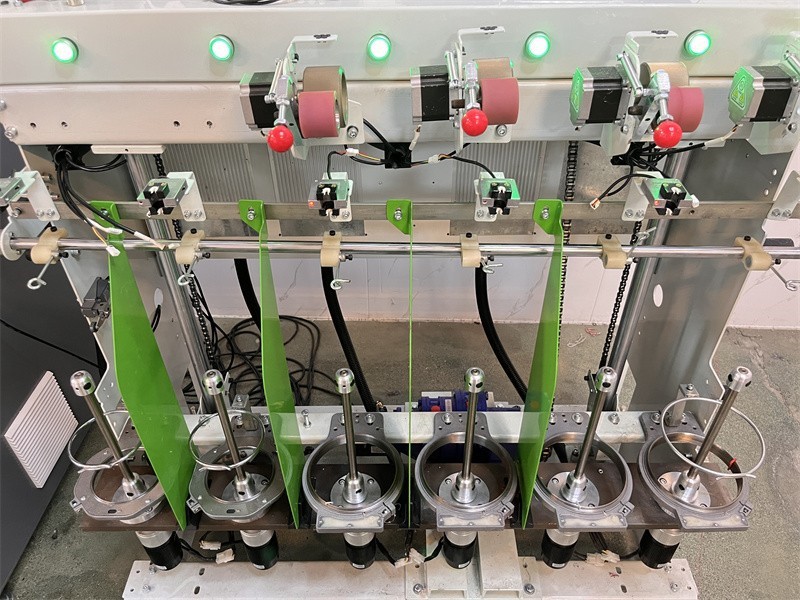
For example, if the machine's rollers are worn, they might not grip the fiber properly, causing the fiber to slip and the machine to work less efficiently. In this case, the production time for a fancy top could increase by 20% or more.
Comparison with Other Machines
It's interesting to compare the Fancy Tops Machine with other yarn - making machines. Take the Air Jet Spinning Machine, for example. This machine is used to spin yarn from fibers. While it has its own unique production process, it can also be affected by similar factors like fiber type and machine speed.
The Air Jet Spinning Machine is generally very fast at producing yarn, but it's not designed to make fancy tops. The Fancy Tops Machine, on the other hand, is specialized for creating those high - quality fiber bundles. Another related machine is the Mop Yarn Twisting Machine. This machine is used to twist yarns together to make mop yarn. It has a different function and production process compared to the Fancy Tops Machine.
Conclusion
So, how long does it take to make a fancy top with a Fancy Tops Machine? Well, it depends on a whole bunch of factors, including machine speed, fiber type, design complexity, operator skill, and machine condition. On average, a simple fancy top might take anywhere from 5 to 20 minutes to make, while a more complex one could take 30 minutes or more.
If you're in the market for a Fancy Tops Machine or want to learn more about how it can fit into your yarn - making production line, don't hesitate to reach out. We're here to help you find the best solution for your needs and answer any questions you might have. Whether you're a small - scale producer or a large - scale factory, our Fancy Tops Machines can offer you high - quality performance and efficient production.
References
- Textile Machinery Handbook: A comprehensive guide on different types of textile machines and their operations.
- Journal of Textile Science and Technology: Articles on the latest research and developments in the textile industry, including yarn - making processes.