

A yarn steaming machine is a crucial piece of equipment in the textile industry, used to improve the quality and performance of yarns. As a reliable yarn steaming machine supplier, I am well - versed in the main components that make up these machines. Understanding these components is essential for both textile manufacturers looking to purchase a machine and those interested in the technical aspects of yarn processing.
1. Steam Generation System
The steam generation system is the heart of a yarn steaming machine. It is responsible for producing the steam that is used to treat the yarn. This system typically consists of a boiler, a water supply unit, and a steam control valve.
The boiler is the primary component where water is heated to produce steam. There are different types of boilers used in yarn steaming machines, such as electric boilers and gas - fired boilers. Electric boilers are known for their clean operation and precise temperature control. They are suitable for small - to - medium - scale operations where a relatively lower steam output is required. On the other hand, gas - fired boilers are more efficient for large - scale production as they can generate a large amount of steam quickly.
The water supply unit ensures a continuous and clean water supply to the boiler. It usually includes a water tank, a water pump, and a water treatment system. The water treatment system is vital as it removes impurities and minerals from the water, preventing scale formation in the boiler, which can reduce its efficiency and lifespan.
The steam control valve regulates the flow and pressure of the steam. It allows operators to adjust the steam parameters according to the specific requirements of the yarn being processed. Precise control of steam pressure and flow is crucial for achieving consistent yarn quality.
2. Yarn Loading and Unloading Mechanism
The yarn loading and unloading mechanism is designed to handle the yarn packages during the steaming process. It includes components such as yarn carriers, loading racks, and unloading conveyors.
Yarn carriers are used to hold the yarn packages in place during steaming. They come in various shapes and sizes, depending on the type of yarn and the machine design. Some yarn carriers are designed to hold multiple yarn packages simultaneously, increasing the processing capacity of the machine.
Loading racks are used to place the yarn carriers into the steaming chamber. They are usually equipped with a lifting mechanism that can move the carriers smoothly into the chamber. This mechanism needs to be precise to ensure that the yarn packages are evenly distributed in the chamber for uniform steaming.
Unloading conveyors are responsible for removing the steamed yarn packages from the chamber. They transport the yarn to the next stage of the production process, such as winding or packaging. A well - designed unloading conveyor system can improve the overall efficiency of the production line.
3. Steaming Chamber
The steaming chamber is where the actual yarn steaming process takes place. It is a sealed enclosure that can withstand high - pressure steam. The chamber is typically made of high - quality stainless steel to resist corrosion and ensure a long service life.
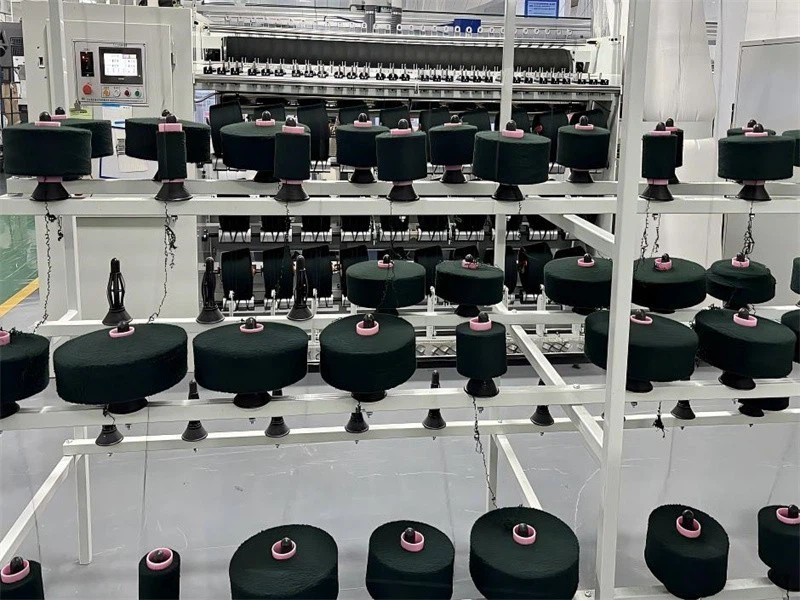

Inside the chamber, there are steam distribution pipes that evenly distribute the steam around the yarn packages. These pipes are designed with multiple nozzles to ensure that the steam reaches every part of the yarn. The chamber also has temperature and pressure sensors that monitor the internal conditions during the steaming process. The data from these sensors is sent to the control system, which can adjust the steam supply accordingly.
Some advanced yarn steaming machines are equipped with a rotating or oscillating mechanism inside the chamber. This mechanism helps to improve the contact between the steam and the yarn, resulting in more uniform steaming.
4. Control System
The control system is the brain of the yarn steaming machine. It manages all the operations of the machine, including steam generation, yarn loading and unloading, and temperature and pressure control.
Modern control systems are usually based on programmable logic controllers (PLCs). PLCs are highly reliable and can be easily programmed to meet different processing requirements. They can store multiple processing recipes, allowing operators to quickly select the appropriate settings for different types of yarn.
The control system also has a human - machine interface (HMI), such as a touch - screen panel. The HMI allows operators to monitor the machine's status, adjust parameters, and view historical data. It provides a user - friendly way to interact with the machine, even for non - technical operators.
In addition, the control system can be integrated with other equipment in the production line, such as Air Jet Spinning Machine or Mop Yarn Twisting Machine. This integration enables seamless data exchange and coordinated operation, improving the overall efficiency of the textile production process.
5. Condensate Removal System
During the steaming process, steam condenses into water. The condensate removal system is responsible for removing this water from the steaming chamber and the steam pipes.
The system typically includes a condensate drain valve, a condensate collection tank, and a condensate pump. The condensate drain valve opens automatically to release the condensed water when a certain level is reached. The condensed water is then collected in the tank. The condensate pump transfers the water from the tank to a drainage system or a water recycling unit.
Proper condensate removal is essential for maintaining the efficiency of the steam generation system and preventing waterlogging in the steaming chamber, which can affect the quality of the yarn.
6. Cooling System
After the yarn has been steamed, it needs to be cooled down quickly to set the new properties. The cooling system is used for this purpose.
There are different types of cooling systems, such as air - cooling and water - cooling systems. Air - cooling systems use fans to blow air over the yarn packages to remove heat. They are relatively simple and cost - effective. Water - cooling systems, on the other hand, use water circulation to absorb the heat from the yarn. They are more efficient in cooling large - volume yarn packages.
The cooling system is usually integrated with the steaming chamber or located adjacent to it. It can be controlled by the main control system to ensure that the cooling process is carried out at the right speed and temperature.
7. Safety Devices
Safety is of utmost importance in any industrial equipment, and yarn steaming machines are no exception. There are several safety devices installed in these machines to protect operators and prevent accidents.
Pressure relief valves are installed in the steam generation system and the steaming chamber. They automatically open when the pressure exceeds a safe level, releasing the excess steam to prevent explosions. Temperature sensors also play a safety role. If the temperature in the chamber or the boiler rises too high, the control system can shut down the machine to avoid damage.
Emergency stop buttons are located at easily accessible positions on the machine. Operators can press these buttons in case of an emergency to immediately stop all operations of the machine.
In conclusion, a yarn steaming machine is a complex piece of equipment composed of multiple components. Each component plays a vital role in ensuring the efficient and high - quality processing of yarn. As a yarn steaming machine supplier, we are committed to providing machines with reliable components and excellent performance. If you are in the textile industry and are looking for a high - quality yarn steaming machine, or if you have any questions about the components and operation of these machines, please feel free to contact us for procurement and further discussions. Our team of experts will be happy to assist you in finding the most suitable solution for your production needs.
References
- Textile Machinery Handbook, 3rd Edition
- Journal of Textile Engineering and Technology, various issues
- Manufacturer's manuals of related yarn processing equipment.