

As a supplier of Cop Winding Machines, I've witnessed firsthand the intricate relationship between temperature and the performance of these machines. Temperature is not just a background environmental factor; it's a critical variable that can significantly impact the functionality, efficiency, and longevity of Cop Winding Machines.
1. The Basics of Cop Winding Machines
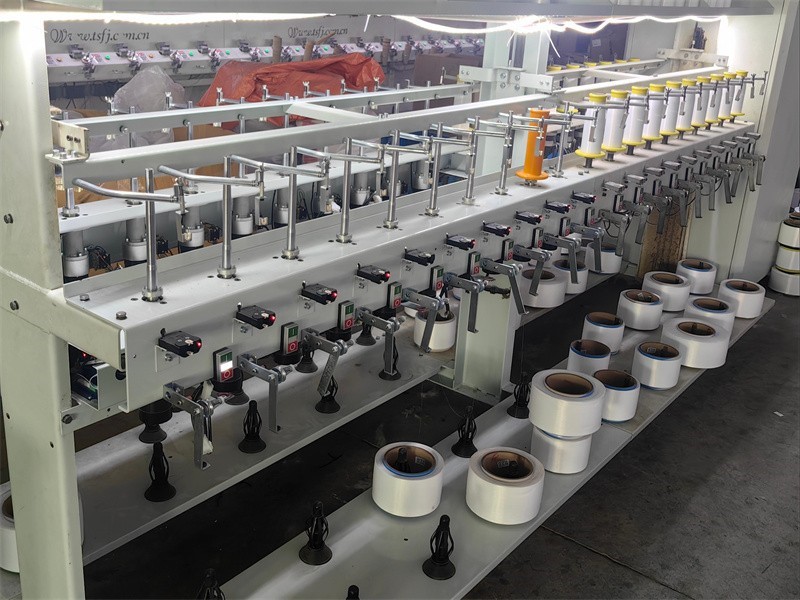
Before delving into the impact of temperature, it's essential to understand what a Cop Winding Machine does. Cop Winding Machines are designed to transfer yarn from cops (small cylindrical packages) to larger cones or other suitable packages. This process is crucial in the textile industry as it prepares the yarn for subsequent processing steps such as weaving or knitting. These machines are known for their precision and high - speed operation, which are influenced by various internal and external factors, including temperature.
The Cop Winding Machine consists of several key components, such as the winding mechanism, tension control system, and drive motors. Each of these components has its own optimal operating conditions, and temperature plays a vital role in maintaining these conditions.
2. Impact on Machine Components
2.1. Electrical Components
Electrical components in a Cop Winding Machine, such as motors, controllers, and sensors, are highly sensitive to temperature. High temperatures can cause the electrical resistance of conductors to increase. According to the basic laws of physics, as the temperature of a conductor rises, the atoms in the conductor vibrate more vigorously. This increased vibration makes it more difficult for electrons to flow through the conductor, resulting in higher resistance.
For motors, higher resistance means more power is dissipated as heat, reducing the motor's efficiency. This inefficiency can lead to overheating, which may cause insulation breakdown in the motor windings. Once the insulation breaks down, short - circuits can occur, potentially damaging the motor beyond repair. In addition, high temperatures can also affect the performance of electronic controllers and sensors. These components rely on precise electrical signals, and temperature - induced changes in resistance can disrupt these signals, leading to inaccurate control and measurement.
On the other hand, low temperatures can also pose problems. In cold environments, the viscosity of lubricants used in electrical components may increase, causing mechanical parts to move less smoothly. This can put additional stress on the motors and other moving parts, increasing the risk of mechanical failure.
2.2. Mechanical Components
Mechanical components, such as gears, bearings, and belts, are also affected by temperature. High temperatures can cause thermal expansion of these components. Different materials have different coefficients of thermal expansion. For example, metals typically expand more than plastics at the same temperature increase. This differential expansion can lead to misalignment of parts. In a Cop Winding Machine, misaligned gears can cause uneven wear, increased noise, and reduced transmission efficiency.
Bearings are particularly sensitive to temperature changes. High temperatures can reduce the effectiveness of lubricants in bearings. Lubricants are designed to reduce friction and wear between the bearing surfaces. When the temperature is too high, the lubricant may thin out, losing its ability to form a protective film between the moving parts. This can result in increased friction, heat generation, and ultimately, bearing failure.
Low temperatures can make materials more brittle. For example, belts may become less flexible in cold conditions, increasing the risk of cracking or breaking. This can disrupt the normal operation of the Cop Winding Machine and lead to production downtime.
3. Impact on Yarn Quality
3.1. Yarn Tension
Temperature can have a significant impact on yarn tension during the winding process. High temperatures can cause the yarn to become more elastic. As the yarn passes through the tension control system of the Cop Winding Machine, the increased elasticity can make it more difficult to maintain a consistent tension. Inconsistent tension can lead to uneven winding, resulting in cones with varying densities. This can cause problems in subsequent textile processing steps, such as uneven dyeing or breakage during weaving.
Conversely, low temperatures can make the yarn stiffer. Stiffer yarn may be more difficult to wind smoothly, and it may also be more prone to breakage. Maintaining a stable temperature is crucial for ensuring consistent yarn tension and high - quality winding.
3.2. Yarn Moisture Content
Temperature is closely related to the moisture content of the yarn. High temperatures can cause the yarn to lose moisture more quickly. Dry yarn is more brittle and prone to breakage. In addition, the static electricity generated during the winding process can be more pronounced in dry conditions, which can attract dust and other contaminants to the yarn, affecting its quality.
Low temperatures can cause moisture in the yarn to condense. Excess moisture can lead to mold growth on the yarn, especially if the machine is in a humid environment. Moldy yarn is not suitable for textile production and must be discarded, resulting in increased production costs.
4. Impact on Machine Efficiency and Productivity
4.1. Production Speed
The performance of a Cop Winding Machine is often measured by its production speed. Temperature can directly affect the maximum achievable production speed. In high - temperature environments, the machine may need to operate at a reduced speed to prevent overheating of components. For example, if the motors are running too hot, the control system may automatically reduce the speed to avoid damage. This reduction in speed can significantly lower the overall productivity of the machine.

In cold environments, the machine may also need to start up more slowly. The mechanical components need time to reach their optimal operating temperature and flexibility. This warm - up period can add to the non - productive time of the machine, reducing the overall efficiency.
4.2. Maintenance Requirements
Temperature - related issues can increase the maintenance requirements of a Cop Winding Machine. As mentioned earlier, high temperatures can cause premature wear of electrical and mechanical components. This means that parts may need to be replaced more frequently, increasing the maintenance cost and downtime.
In addition, temperature - induced problems such as misalignment and bearing failure often require skilled technicians to diagnose and repair. This can further disrupt production and increase the overall cost of ownership of the Cop Winding Machine.
5. Controlling Temperature in Cop Winding Machines
5.1. Environmental Control
One of the most effective ways to control temperature is to maintain a stable environment in the production facility. This can be achieved through proper ventilation, air - conditioning, and heating systems. Ventilation helps to remove hot air and moisture from the machine area, preventing the buildup of heat. Air - conditioning can be used to cool the environment during hot weather, while heating can be employed in cold seasons to keep the temperature within the optimal range.
5.2. Machine Design and Cooling Systems
Manufacturers can also design Cop Winding Machines with built - in cooling systems. For example, some machines are equipped with fans or heat sinks to dissipate heat from electrical components. Liquid - cooling systems can also be used for more efficient heat removal. These cooling systems help to maintain the temperature of the machine components within a safe operating range, improving the machine's performance and reliability.
6. Conclusion and Call to Action
In conclusion, temperature has a far - reaching impact on Cop Winding Machines, affecting both the machine itself and the quality of the wound yarn. As a supplier of Cop Winding Machines, we understand the importance of temperature control in ensuring the optimal performance of our machines. We also offer Automatic Cone Winding Machine and Automatic Yarn Winding Machine that are designed with advanced temperature - control features to minimize the negative effects of temperature variations.
If you are in the textile industry and looking for high - quality winding machines that can perform consistently under different temperature conditions, we are here to help. Our team of experts can provide you with detailed information about our products and how they can meet your specific production needs. Contact us today to start a discussion about your requirements and explore how our Cop Winding Machines can enhance your production efficiency and yarn quality.
References
- Incropera, F. P., & DeWitt, D. P. (2002). Fundamentals of Heat and Mass Transfer. John Wiley & Sons.
- Shigley, J. E., & Mischke, C. R. (2001). Mechanical Engineering Design. McGraw - Hill.
- Morton, W. E., & Hearle, J. W. S. (1993). Physical Properties of Textile Fibres. Woodhead Publishing.