

Yarn breakage is a common challenge in the textile industry, and effectively handling it is crucial for maintaining the efficiency and quality of the winding process. As a leading supplier of Automatic Cone Winding Machine, I understand the significance of this issue and have in - depth knowledge of how our machines tackle yarn breakage.
Detection of Yarn Breakage
The first step in handling yarn breakage is to detect it promptly. Our Automatic Cone Winding Machines are equipped with highly sensitive yarn sensors. These sensors work on different principles, such as optical or mechanical detection.
Optical sensors use light beams to monitor the presence of the yarn. When the yarn breaks, the light beam is no longer interrupted, and the sensor immediately sends a signal to the machine's control system. This type of sensor is very accurate and can detect even the slightest breakage, regardless of the yarn's color or texture.
Mechanical sensors, on the other hand, rely on the physical movement of the yarn. They are usually in the form of a small lever or a roller that is in contact with the yarn. When the yarn breaks, the tension on the sensor changes, and it triggers an alarm. Mechanical sensors are robust and can work well in harsh industrial environments.
Once the breakage is detected, the machine stops the winding process immediately. This prevents further damage to the yarn and ensures that the broken ends are not tangled with the rest of the yarn on the cone.
Handling the Broken Ends
After the machine has stopped due to yarn breakage, the next step is to handle the broken ends. Our Automatic Cone Winding Machines are designed with advanced mechanisms to simplify this process.
One of the key features is the automatic piecing system. This system is capable of finding and joining the broken ends of the yarn. It uses a combination of suction devices and mechanical grippers to locate the two broken ends. The suction devices create a vacuum that pulls the loose ends towards the piecing area, while the grippers hold the ends firmly in place.
Once the ends are in position, the piecing system uses a precise method to join them. Depending on the type of yarn, different joining techniques can be used. For natural fibers like cotton, air - jet piecing is often used. This method uses a high - speed jet of air to entangle the fibers of the two ends, creating a strong and uniform joint. For synthetic fibers, mechanical splicing may be more appropriate. This involves physically intertwining the fibers of the broken ends to form a secure connection.
Minimizing Downtime
Downtime caused by yarn breakage can significantly impact the productivity of a textile factory. To minimize this, our Automatic Cone Winding Machines are designed to be highly efficient in handling breakages.
The machine's control system is programmed to quickly analyze the cause of the breakage. If it is a simple issue like a minor knot or a temporary snag, the machine can often resume the winding process after the piecing is completed. However, if the breakage is due to a more serious problem, such as a faulty yarn supply or a damaged guide, the system will display an error message, indicating the exact location and nature of the problem. This allows the operators to take immediate corrective action.
In addition, our machines are equipped with a multi - spindle design. This means that even if one spindle experiences a yarn breakage, the other spindles can continue to operate normally. This significantly reduces the overall downtime of the machine and ensures a continuous production flow.
Quality Control after Piecing
After the broken ends have been joined, it is essential to ensure that the quality of the yarn is not compromised. Our Automatic Cone Winding Machines have built - in quality control systems to check the strength and uniformity of the pieced area.
The machines use sensors to measure the tension of the yarn after piecing. If the tension is outside the acceptable range, it indicates that the joint may not be strong enough. In such cases, the machine can automatically re - piece the yarn or reject the section of the yarn with the faulty joint.
Another important aspect of quality control is the visual inspection of the pieced area. Some of our advanced models are equipped with cameras that can capture high - resolution images of the joint. These images are then analyzed by a computer algorithm to detect any irregularities in the joint, such as uneven fiber distribution or loose ends.
Preventive Measures
In addition to handling yarn breakage when it occurs, our Automatic Cone Winding Machines also incorporate several preventive measures to reduce the frequency of breakages.
One of the main preventive measures is the proper tension control. The machine is designed to maintain a consistent tension on the yarn throughout the winding process. This is achieved through the use of tensioners and sensors. The tensioners adjust the tension on the yarn based on the feedback from the sensors. By keeping the tension within the optimal range, the risk of breakage due to excessive or uneven tension is minimized.
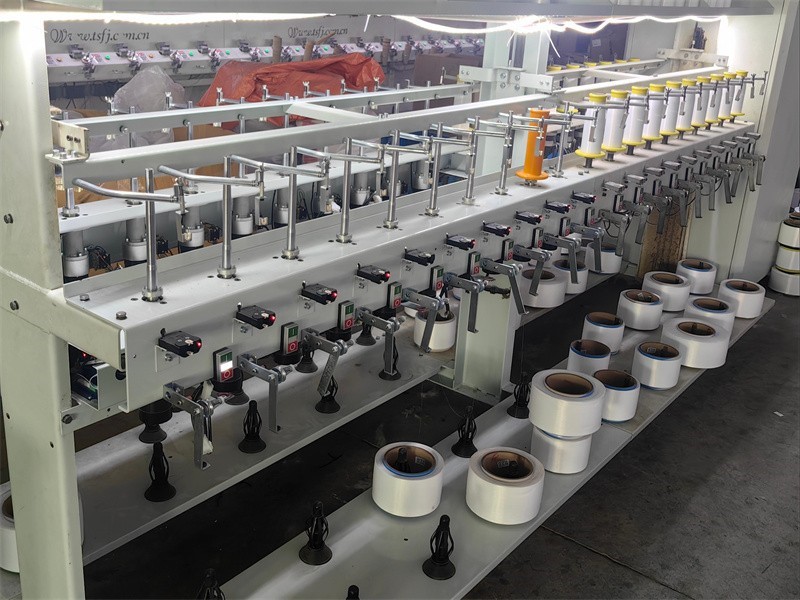

Another preventive measure is the regular cleaning and maintenance of the machine. Dust, lint, and other debris can accumulate on the yarn guides, sensors, and other components of the machine, which can cause friction and lead to yarn breakage. Our machines are designed with easy - to - clean parts, and we provide detailed maintenance guidelines to ensure that the machines are kept in good working condition.
Integration with Other Equipment
Our Automatic Cone Winding Machines can be integrated with other equipment in the textile production line, such as Cop Winding Machine and Automatic Yarn Winding Machine. This integration can further improve the efficiency of the overall production process and reduce the occurrence of yarn breakage.
For example, when integrated with a Cop Winding Machine, the Automatic Cone Winding Machine can receive a continuous supply of yarn in a well - organized manner. This reduces the chances of tangling and breakage during the transfer of yarn from one machine to another.
Conclusion
Yarn breakage is a complex issue in the textile industry, but our Automatic Cone Winding Machines are designed to handle it effectively. Through advanced detection systems, efficient piecing mechanisms, quality control measures, and preventive strategies, we ensure that our machines can minimize downtime and maintain high - quality yarn production.
If you are looking for a reliable and efficient Automatic Cone Winding Machine for your textile factory, we are here to help. Our team of experts can provide you with detailed information about our products and assist you in choosing the right machine for your specific needs. Contact us today to start a discussion about your procurement requirements and take your textile production to the next level.
References
- Textile Machinery Handbook, various editions.
- Research papers on yarn winding technology from leading textile research institutions.
- Manufacturer's manuals and technical specifications for Automatic Cone Winding Machines.