

Yo, folks! I'm a supplier of Automatic Yarn Winding Machine, and today I wanna chat about how our machines handle yarn with different crimps. It's a pretty cool topic, and I think you'll find it interesting, whether you're in the textile industry or just curious about how things work.
First off, let's talk about what yarn crimp is. Crimp refers to the waviness or curl in the yarn. Different types of yarn have different levels of crimp, and this can have a big impact on how the yarn behaves during the winding process. For example, highly crimped yarn can be more difficult to wind because it tends to tangle and bunch up. On the other hand, low-crimp yarn may be smoother and easier to handle, but it can also be more prone to slipping off the winding spool.
So, how does our Automatic Yarn Winding Machine deal with these challenges? Well, we've got a few tricks up our sleeve.
Tension Control
One of the most important factors in winding yarn with different crimps is tension control. Our machines are equipped with advanced tension control systems that can adjust the tension of the yarn as it's being wound. This is crucial because different crimp levels require different amounts of tension to ensure a smooth and even winding.
For highly crimped yarn, we need to apply more tension to straighten out the curls and prevent tangling. Our tension control system can sense the amount of crimp in the yarn and automatically adjust the tension accordingly. This ensures that the yarn is wound tightly and evenly, without any loose or uneven areas.
On the other hand, for low-crimp yarn, we need to reduce the tension to prevent the yarn from slipping off the spool. Our machines can also detect the crimp level of low-crimp yarn and adjust the tension to keep the yarn in place.
Guide Systems
Another key feature of our Automatic Yarn Winding Machine is the guide system. The guide system helps to direct the yarn onto the spool in a controlled manner, preventing it from wandering or tangling.
We use high-quality guides that are designed to handle yarn with different crimps. The guides are adjustable, so we can customize them to suit the specific needs of each type of yarn. For example, for highly crimped yarn, we can use wider guides to accommodate the curls and prevent the yarn from getting stuck. For low-crimp yarn, we can use narrower guides to keep the yarn in a tight, straight path.
Speed Adjustment
The speed at which the yarn is wound also plays a role in handling different crimps. Our machines are capable of adjusting the winding speed to match the characteristics of the yarn.
For highly crimped yarn, we usually wind it at a slower speed to give the tension control system more time to adjust and prevent tangling. Slower winding also allows the yarn to straighten out gradually, reducing the risk of breakage.
On the other hand, for low-crimp yarn, we can wind it at a faster speed because it's easier to handle. Faster winding can increase productivity and reduce the overall winding time.
Different Winding Patterns
In addition to tension control, guide systems, and speed adjustment, our Automatic Yarn Winding Machine can also use different winding patterns to handle yarn with different crimps.
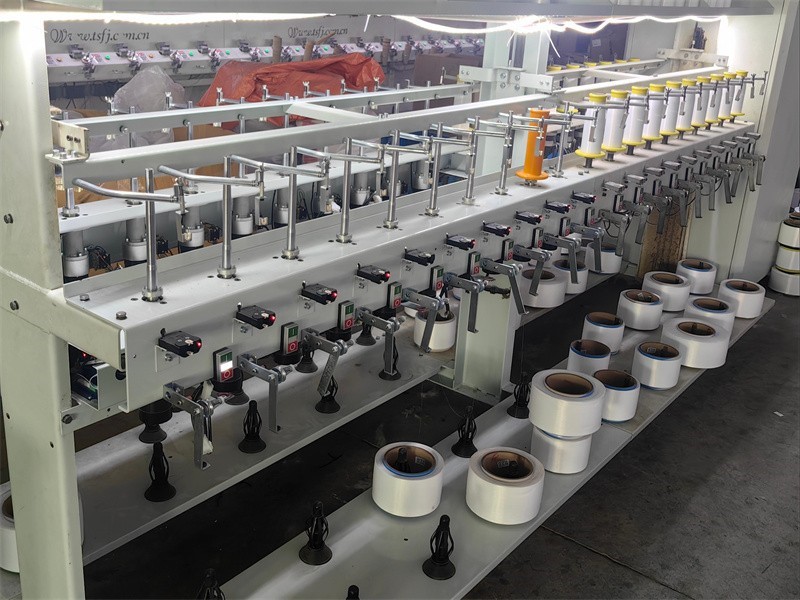

For example, for highly crimped yarn, we may use a cross-winding pattern. Cross-winding involves winding the yarn at an angle to the spool axis, which helps to prevent the yarn from bunching up and tangling. This pattern also allows the yarn to expand and contract as it's being wound, accommodating the curls in the yarn.
For low-crimp yarn, we may use a parallel-winding pattern. Parallel-winding involves winding the yarn parallel to the spool axis, which creates a tight and compact package. This pattern is ideal for low-crimp yarn because it helps to keep the yarn in place and prevents it from slipping off the spool.
Compatibility with Different Yarn Types
Our Automatic Yarn Winding Machine is designed to be compatible with a wide range of yarn types, including natural fibers like cotton and wool, as well as synthetic fibers like polyester and nylon. Different fibers have different crimp characteristics, and our machines can handle them all.
For example, cotton yarn is often highly crimped, especially if it's been processed using certain techniques. Our machines can adjust the tension, guide system, speed, and winding pattern to handle the unique crimp of cotton yarn.
On the other hand, polyester yarn is usually low-crimp and smooth. Our machines can also adapt to the characteristics of polyester yarn, ensuring a smooth and efficient winding process.
Automatic Cone Winding Machine and Cop Winding Machine
We also offer Automatic Cone Winding Machine and Cop Winding Machine, which are specialized versions of our Automatic Yarn Winding Machine.
The Automatic Cone Winding Machine is designed to wind yarn onto cone-shaped packages. This type of winding is commonly used in the textile industry for further processing, such as dyeing and weaving. Our Automatic Cone Winding Machine can handle yarn with different crimps, just like our standard Automatic Yarn Winding Machine.
The Cop Winding Machine, on the other hand, is used to wind yarn onto small, cylindrical packages called cops. Cops are often used in spinning mills for feeding the yarn into the spinning machines. Our Cop Winding Machine is also capable of handling yarn with different crimps, ensuring a high-quality winding result.
Conclusion
In conclusion, our Automatic Yarn Winding Machine is a versatile and reliable solution for winding yarn with different crimps. With advanced tension control, guide systems, speed adjustment, and winding patterns, our machines can handle a wide range of yarn types and crimp levels.
If you're in the market for an Automatic Yarn Winding Machine, Automatic Cone Winding Machine, or Cop Winding Machine, I encourage you to get in touch with us. We'd be happy to discuss your specific needs and help you find the right machine for your business.
References
- Textile Machinery Handbook
- Yarn Manufacturing Technology by Peter Lord and Mohamed Mohamed