

Hey there! As a supplier of Air Jet Spinning Machines, I've seen firsthand how different generations of these machines can impact yarn properties. In this blog, I'll break down the key differences in yarn properties between various generations of Air Jet Spinning Machines.
First - Generation Air Jet Spinning Machines
The first - generation Air Jet Spinning Machines were a revolutionary step in the textile industry. They were designed to produce yarn at a much faster rate compared to traditional spinning methods. However, the yarns produced by these machines had some distinct characteristics.
The yarns from first - generation machines usually had a relatively smooth surface. This was because the air - jet technology used in these machines was mainly focused on twisting the fibers together efficiently. But this also meant that the yarns had less bulk. They were often thinner and had a lower hairiness level. The lack of bulk could sometimes make the yarns less suitable for applications where a more voluminous fabric was required, like some types of knitted sweaters.
Another aspect was the strength of the yarn. While the first - generation machines could produce yarns with decent strength, they were not as strong as some of the yarns produced by later generations. This was due to the limitations in the way the fibers were intertwined. The air - jet mechanism was not as refined as it would become in later models, resulting in a less consistent fiber alignment.
Second - Generation Air Jet Spinning Machines
The second - generation machines brought about some significant improvements. One of the major changes was in the yarn's bulk. These machines were designed to introduce more air turbulence during the spinning process. This led to the fibers being more loosely packed in the yarn, increasing its bulk. As a result, the yarns were more suitable for a wider range of applications, including those that required a softer and more voluminous fabric.
The hairiness of the yarn also increased slightly. The additional air movement in the second - generation machines caused some of the fibers to protrude from the yarn surface, giving it a more natural and textured look. This increased hairiness could be an advantage in certain applications, such as in creating a fuzzy or warm fabric.
In terms of strength, the second - generation machines made strides. The improved air - jet technology allowed for a better alignment of the fibers, resulting in stronger yarns. This made the yarns more reliable for use in high - stress applications, like in industrial fabrics.
Third - Generation Air Jet Spinning Machines
The third - generation Air Jet Spinning Machines took things to a whole new level. These machines are equipped with advanced control systems that can precisely regulate the air flow and fiber movement.
One of the most notable differences in the yarn properties is the uniformity. The third - generation machines can produce yarns with a very high degree of uniformity in terms of thickness, strength, and color. This is crucial for applications where consistency is key, such as in high - end fashion fabrics.
The yarns from these machines also have excellent elasticity. The advanced spinning process allows the fibers to be arranged in a way that gives the yarn a natural stretch and recovery ability. This makes the yarns ideal for use in sportswear and other stretchy fabrics.
Moreover, the third - generation machines can handle a wider variety of fibers. They can spin both natural and synthetic fibers with ease, and even blend different types of fibers to create unique yarn properties.
Comparing Yarn Properties Across Generations
When comparing the yarn properties across different generations, it's clear that each new generation has built on the strengths of the previous one.
In terms of bulk, the first - generation yarns were the least bulky, while the second - generation machines made significant improvements, and the third - generation machines can produce yarns with customizable bulk levels.
Hairiness also shows a progressive change. The first - generation yarns had low hairiness, the second - generation introduced more hairiness for a textured look, and the third - generation can control the hairiness to meet specific requirements.

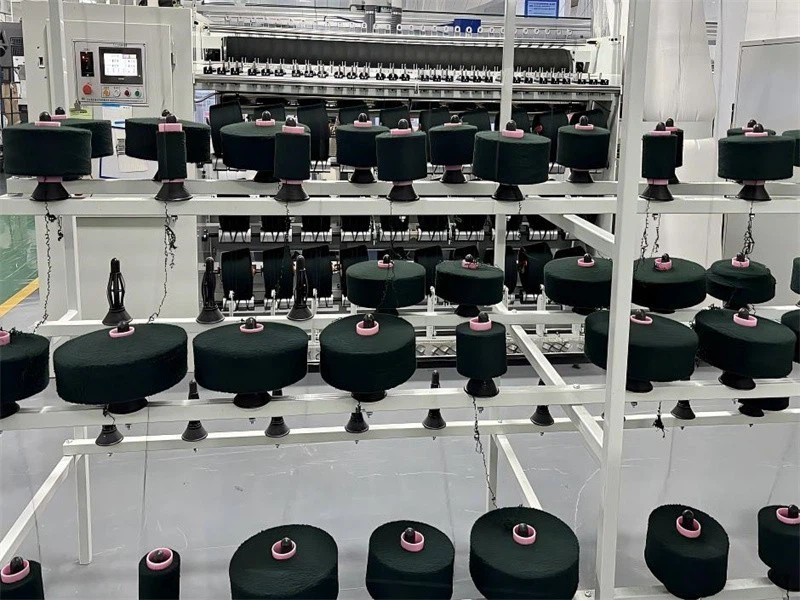
Strength has also improved over the generations. The first - generation yarns had decent strength, but the second and third - generation machines have produced stronger and more consistent yarns.
Related Machines and Their Impact on Yarn
There are also some related machines that can further enhance the properties of the yarn produced by Air Jet Spinning Machines. For example, the Fluffing Yarn Machine can add more bulk and softness to the yarn. This machine works by fluffing up the fibers in the yarn, making it more voluminous and comfortable to touch.
The Fancy Tops Machine can create unique and decorative effects on the yarn. It can add different colors, textures, and patterns to the yarn, making it suitable for high - fashion and decorative applications.
The Raising Machine is another important machine. It raises the fibers on the surface of the yarn, increasing its hairiness and softness. This can give the yarn a luxurious and warm feel, which is great for winter clothing.
Why Choose Our Air Jet Spinning Machines
Our Air Jet Spinning Machines are designed to offer the latest technology and the best performance. Whether you're looking to produce high - volume, high - quality yarns for industrial use or unique, specialty yarns for the fashion industry, our machines can meet your needs.
The advanced features of our machines ensure that you can produce yarns with the desired properties, such as bulk, strength, and hairiness. We also offer excellent after - sales support to ensure that your machines run smoothly and efficiently.
Let's Connect
If you're interested in learning more about our Air Jet Spinning Machines or have any questions about yarn properties and production, don't hesitate to reach out. We're here to help you make the best choice for your business. Whether you're a small - scale textile producer or a large - scale manufacturer, we can provide you with the right solutions.
References
- Textile Technology Handbook, Volume 1
- Journal of Textile Science and Engineering, various issues on spinning technology
So, if you're in the market for Air Jet Spinning Machines or want to discuss how to improve your yarn production, give us a shout. We're ready to assist you in taking your textile business to the next level.