

Hey there! As a supplier of yarn winding machines, I often get asked about the production capacity of these machines per day. It's a crucial question for anyone in the textile industry, whether you're a small business owner looking to scale up or a large factory manager aiming to optimize production. So, let's dive right in and break down what affects the daily production capacity of a yarn winding machine.
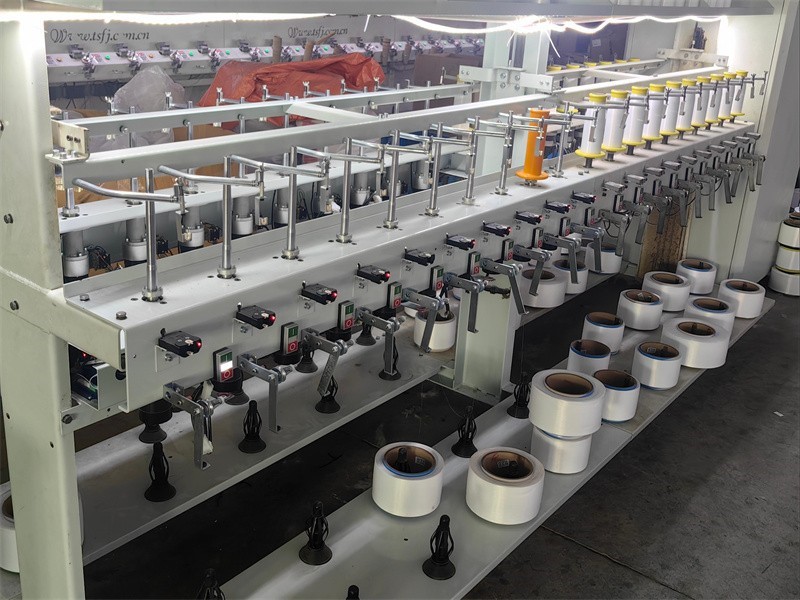
First off, it's important to understand that there are different types of yarn winding machines, each with its own unique features and capabilities. We've got the Automatic Cone Winding Machine, the Automatic Yarn Winding Machine, and the Cop Winding Machine. Each of these machines is designed for specific tasks and can have varying production capacities.
Factors Affecting Production Capacity
Machine Type and Model
The type and model of the yarn winding machine play a huge role in determining its production capacity. For example, an automatic cone winding machine is generally faster and more efficient than a manual one. These machines are equipped with advanced technology that allows for continuous and high-speed winding. Some of the latest models can wind hundreds of cones per hour, depending on the settings and the type of yarn being used.
On the other hand, a cop winding machine is designed for a different purpose. It's mainly used for winding yarn from cops onto larger packages. The production capacity of a cop winding machine might be lower compared to a cone winding machine, but it's still an essential part of the textile production process.
Yarn Type and Thickness
The type and thickness of the yarn also have a significant impact on the production capacity. Different types of yarn, such as cotton, wool, or synthetic fibers, have different characteristics that can affect the winding speed. For instance, a thicker yarn might require a slower winding speed to ensure a proper and even winding. This means that the production capacity will be lower compared to a thinner yarn.
Moreover, the quality of the yarn can also affect the machine's performance. If the yarn has a lot of knots or impurities, the machine might need to stop more frequently to clear these issues, which can reduce the overall production capacity.
Machine Settings
The settings of the yarn winding machine can be adjusted to optimize production. For example, the winding speed, tension, and package size can all be customized according to the specific requirements of the production process. By increasing the winding speed, you can potentially increase the production capacity. However, it's important to find the right balance because setting the speed too high can lead to quality issues, such as uneven winding or broken yarn.
Operator Skill and Experience
The skill and experience of the operator also matter. A well-trained operator can handle the machine more efficiently, troubleshoot problems quickly, and make adjustments to optimize production. On the other hand, an inexperienced operator might make mistakes that can slow down the production process and reduce the overall capacity.
Calculating the Production Capacity
To calculate the production capacity of a yarn winding machine per day, you need to consider several factors. First, you need to know the winding speed of the machine, which is usually measured in meters per minute or packages per hour. Then, you need to factor in the operating hours per day. Most textile factories operate for around 8 to 12 hours per day, but this can vary depending on the production schedule.
Let's take an example of an automatic cone winding machine that has a winding speed of 1000 meters per minute. If the machine operates for 8 hours per day (480 minutes), the total length of yarn that can be wound in a day is 1000 meters/minute x 480 minutes = 480,000 meters. However, this is just a theoretical calculation. In reality, there will be some downtime for maintenance, cleaning, and dealing with any issues that might arise during the production process.

Let's assume that the machine has a downtime of about 10% per day. This means that the actual operating time is 480 minutes x 0.9 = 432 minutes. So, the actual production capacity will be 1000 meters/minute x 432 minutes = 432,000 meters per day.
Real-World Examples
In a real-world scenario, the production capacity can vary widely depending on the factors mentioned above. For a small textile business using a basic cop winding machine, the production capacity might be around 50 to 100 packages per day. This is suitable for producing small batches of yarn for local markets or for specific projects.
On the other hand, a large-scale textile factory using state-of-the-art automatic cone winding machines can produce thousands of cones per day. These factories often have multiple machines running simultaneously and can meet the high demand of the global textile market.
Tips to Increase Production Capacity
If you're looking to increase the production capacity of your yarn winding machine, here are some tips:
- Regular Maintenance: Keep the machine well-maintained to ensure smooth operation. This includes cleaning, lubricating, and replacing worn-out parts regularly.
- Operator Training: Provide proper training to your operators to improve their skills and efficiency. This can help reduce downtime and increase the overall production capacity.
- Optimize Machine Settings: Experiment with different machine settings to find the optimal combination for your specific yarn and production requirements.
- Upgrade to a Newer Model: Consider upgrading to a newer and more advanced model of the yarn winding machine. These machines often come with improved features and higher production capacities.
Conclusion
In conclusion, the production capacity of a yarn winding machine per day depends on various factors, including the machine type, yarn type, machine settings, and operator skill. By understanding these factors and taking the necessary steps to optimize production, you can increase the efficiency and productivity of your textile business.
If you're interested in learning more about our yarn winding machines or have any questions about production capacity, feel free to reach out to us. We're here to help you find the right solution for your business needs. Whether you're a small startup or a large corporation, we've got the expertise and the products to support your growth in the textile industry.
References
- Textile Machinery Handbook
- Industry reports on yarn winding technology