

In the dynamic realm of textile manufacturing, the ability to integrate different types of equipment is a game - changer. As a supplier of Fancy Yarn Making Machines, I often encounter inquiries about whether these machines can be connected to other textile equipment. This blog post aims to explore this topic in detail, shedding light on the possibilities, challenges, and benefits of such connections.
The Need for Integration in Textile Manufacturing
The textile industry is evolving at a breakneck pace, driven by consumer demand for innovative and high - quality products. To meet these demands, manufacturers are constantly looking for ways to streamline their production processes, increase efficiency, and reduce costs. Connecting different textile equipment, including Fancy Yarn Making Machines, is a strategic move towards achieving these goals.
Integrated textile production systems allow for seamless transfer of materials between different stages of the manufacturing process. For example, a Fancy Yarn Making Machine can produce unique and complex yarns, which can then be directly fed into a weaving or knitting machine. This eliminates the need for manual handling and reduces the risk of errors and delays.
Compatibility of Fancy Yarn Making Machines with Other Textile Equipment
The first question that comes to mind is whether a Fancy Yarn Making Machine can actually be connected to other textile equipment. The answer is yes, but it depends on several factors.
Technical Compatibility
One of the key factors is technical compatibility. Fancy Yarn Making Machines come in various types and designs, each with its own set of specifications and operating parameters. Similarly, other textile equipment such as spinning machines, weaving machines, and knitting machines also have their own requirements.

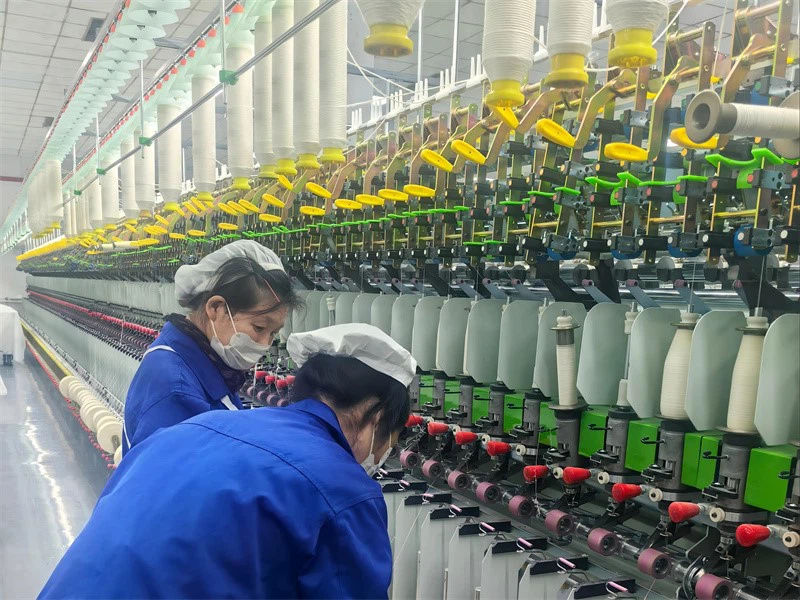
For instance, the speed at which a Fancy Yarn Making Machine produces yarn must be compatible with the speed at which the downstream equipment can process it. If the yarn production rate is too high, the downstream equipment may not be able to handle the volume, leading to jams and breakdowns. On the other hand, if the production rate is too low, it may result in inefficiencies and underutilization of the downstream equipment.
Another aspect of technical compatibility is the physical connection between the machines. This includes the size and shape of the yarn delivery systems, the type of connectors used, and the alignment of the machines. In some cases, modifications may be required to ensure a proper fit and smooth operation.
Control System Compatibility
In addition to technical compatibility, the control systems of the machines also need to be compatible. Modern textile equipment often uses advanced control systems to monitor and adjust various parameters such as speed, tension, and quality. Connecting a Fancy Yarn Making Machine to other equipment requires that these control systems can communicate with each other effectively.
For example, if the Fancy Yarn Making Machine detects a quality issue with the yarn, it should be able to send a signal to the downstream equipment to stop or adjust the production process accordingly. This requires a common communication protocol and a well - designed interface between the control systems.
Examples of Connected Textile Systems
To illustrate the potential of connecting Fancy Yarn Making Machines to other textile equipment, let's look at some real - world examples.
Connection with Spinning Machines
A spinning machine is used to produce the basic yarn from raw fibers. A Fancy Yarn Making Machine can be connected to a spinning machine to add unique features to the yarn. For example, the Fancy Yarn Making Machine can twist, wrap, or blend different types of yarns to create fancy yarns with interesting textures and colors.
The Ring Spindle Bobbin Dual Color Fancy Twisting Machine is a great example of a Fancy Yarn Making Machine that can be connected to a spinning machine. It can take the output of the spinning machine and transform it into dual - color fancy yarns, which can then be used in a variety of textile applications.
Connection with Weaving Machines
Weaving machines are used to create fabrics from yarns. Connecting a Fancy Yarn Making Machine to a weaving machine allows for the production of fabrics with unique patterns and designs. The fancy yarns produced by the Fancy Yarn Making Machine can be used as warp or weft yarns in the weaving process.
The Fancy Twisting Machine Ring Bobbin Composite Single Color can be integrated with a weaving machine to produce fabrics with single - color but highly textured patterns. The machine can twist and combine different yarns to create a composite yarn that adds depth and character to the fabric.
Connection with Knitting Machines
Knitting machines are used to create knitted fabrics. Similar to weaving machines, a Fancy Yarn Making Machine can be connected to a knitting machine to produce knitted fabrics with unique features. The Ring Spindle Dual Color Fancy Twisting Machine can be used to create dual - color fancy yarns that are ideal for knitting colorful and eye - catching fabrics.
Challenges in Connecting Fancy Yarn Making Machines
While the benefits of connecting Fancy Yarn Making Machines to other textile equipment are significant, there are also some challenges that need to be addressed.
Cost
One of the main challenges is the cost of integration. Modifying the machines to ensure compatibility, installing additional control systems, and training the operators can be expensive. Manufacturers need to carefully evaluate the cost - benefit ratio before deciding to connect their equipment.
Maintenance and Troubleshooting
Connected textile systems are more complex than standalone machines. This means that maintenance and troubleshooting can be more challenging. If one machine in the system malfunctions, it can affect the entire production process. Manufacturers need to have a well - trained maintenance team and a comprehensive maintenance plan in place to ensure smooth operation.
Benefits of Connecting Fancy Yarn Making Machines
Despite the challenges, the benefits of connecting Fancy Yarn Making Machines to other textile equipment far outweigh the costs.
Increased Efficiency
By eliminating manual handling and reducing the time between different production stages, connected systems can significantly increase the overall efficiency of the textile manufacturing process. This leads to higher production rates and lower production costs.
Improved Quality
Connected systems allow for better control over the production process, which can result in improved quality of the final products. The ability to monitor and adjust the parameters of the Fancy Yarn Making Machine and other equipment in real - time ensures that the yarns and fabrics meet the desired quality standards.
Product Innovation
Connecting Fancy Yarn Making Machines to other textile equipment opens up new possibilities for product innovation. Manufacturers can create unique and complex yarns and fabrics that are not possible with standalone machines. This gives them a competitive edge in the market and allows them to meet the changing demands of consumers.
Conclusion
In conclusion, a Fancy Yarn Making Machine can be connected to other textile equipment, provided that the technical and control system compatibility issues are addressed. While there are challenges such as cost and maintenance, the benefits of increased efficiency, improved quality, and product innovation make it a worthwhile investment for textile manufacturers.
If you are interested in exploring the possibilities of connecting our Fancy Yarn Making Machines to your existing textile equipment, we would be more than happy to discuss your specific needs and requirements. Contact us to start a conversation about how our machines can enhance your production process and help you stay ahead in the competitive textile market.
References
- Textile Machinery Handbook, various editions
- Journal of Textile Engineering and Technology, multiple issues
- Industry reports on textile manufacturing trends and technologies