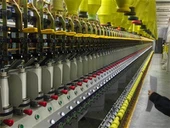
Yarn processing machinery is core equipment in the textile industry, and its design principles directly impact yarn quality, production efficiency, and energy consumption. The design of modern yarn processing machinery integrates multidisciplinary technologies such as mechanical engineering, materials science, and automated control, aiming to achieve efficient, stable, and precise yarn production. This article will systematically explain the design principles of yarn processing machinery from the perspectives of mechanical structure design, power transmission systems, tension control mechanisms, intelligent control, and material selection.
Mechanical Structure Design Principles
The mechanical structure design of yarn processing machinery must meet the requirements of high precision, high reliability, and low wear. Its main components include the feeding mechanism, drafting mechanism, twisting mechanism, and winding mechanism.
1. Feeding mechanism: This mechanism is responsible for evenly and stably conveying the fiber raw material to subsequent processing stages. The design must consider the fiber arrangement to ensure that the fibers do not tangle or break during transportation. Common feeding mechanisms use rollers (roller feeding) or air flow (air feeding). The former is suitable for short fibers, while the latter is suitable for filament or chemical fibers.
2. Drafting Mechanism: The speed differential between the rollers stretches the fibers to achieve the desired fineness and uniformity. Key design considerations for the drafting mechanism lie in the roller arrangement, the pressure system, and the material selection of the top rollers (or aprons). Modern drafting mechanisms often utilize a three- or four-roller system, combined with elastic pressure technology, to enhance drafting stability and fiber control.
3. Twisting Mechanism: This mechanism imparts the necessary twist to the yarn to enhance its strength and structural stability. Traditional twisting methods include ring twisting, rotor twisting, and air-jet twisting. Ring twisting utilizes a steel ring and traveler to impart uniform twist to the yarn during high-speed rotation. Rotor spinning and air-jet spinning, on the other hand, utilize spindleless technology, applying twist directly through airflow or mechanical means, making them suitable for high-capacity production.
4. Winding Mechanism: The finished yarn is wound onto bobbins at a uniform density for easy transportation and weaving. The winding mechanism must be designed to ensure a well-formed package, avoiding overlap or looseness. A servo motor is typically used to control the winding speed for precise winding.
Power Transmission System Design
The power transmission system of yarn processing machinery directly impacts the equipment's operating efficiency and stability. Traditional machines often use gear or belt drives, but modern designs tend to employ synchronous belt drives or direct drive motors (such as servo motors) to reduce energy loss and mechanical vibration.
1. Transmission Method: Gear drives are suitable for high torque transmission, but are noisy and require high maintenance. Belt drives provide cushioning but are prone to slippage. Synchronous belt drives combine the advantages of both, offering high transmission accuracy and low noise. Servo motor direct drive enables precise speed control and is suitable for high-speed spinning machines.
2. Speed Variable and Adjustable: During yarn processing, different processes (such as drafting and twisting) require different speeds, so the power system must have flexible speed regulation capabilities. Modern machinery often employs variable frequency drive or servo control technology to accommodate the production requirements of different fiber raw materials and yarn specifications.
Tension Control Mechanism
During yarn processing, tension stability directly impacts yarn quality and end-breakage rate. Therefore, tension control is a key aspect of yarn processing machinery design.
1. Mechanical Tension Adjustment: Yarn tension is controlled by adjusting roller pressure, yarn guide position, and other methods. For example, adjustable yarn guide hooks are installed in the drafting zone to balance the tension on the fibers.
2. Electronic Tension Control: Modern yarn processing machinery widely uses tension sensors to monitor yarn tension in real time and automatically adjust roller speed or yarn guide position through closed-loop control systems to ensure constant tension.
3. Aerodynamic Control: In open-end spinning or air-jet spinning, airflow uniformity directly affects yarn tension. Therefore, optimized airflow channel design is required to reduce turbulence and fluctuations.
Intelligent and Automated Design
With the development of Industry 4.0, yarn processing machinery is moving towards intelligence. Modern designs incorporate sensor technology, machine learning, and automated control algorithms to improve production efficiency and product quality.
1. Online Monitoring System: Fiber optic sensors and image recognition systems are installed to monitor yarn quality (such as uneven thickness, end breaks, and hairiness) in real time and automatically adjust process parameters.
2. Adaptive Control: Utilizing artificial intelligence algorithms, mechanical equipment automatically optimizes processing parameters based on raw material characteristics (such as fiber length and strength), reducing manual intervention.
3. Remote Monitoring and Maintenance: Leveraging Internet of Things (IoT) technology, equipment operating data can be remotely collected and analyzed to predict failures and optimize maintenance plans, thereby improving equipment utilization.
Material Selection and Wear Resistance Design
Yarn processing machinery operates at high speeds for extended periods of time, so key components (such as rollers, rings, and yarn guides) require materials with high wear resistance and low friction coefficients.
1. Metal Components: Rollers are typically made of high-quality alloy steel with surface hardening treatments (such as nitriding or chrome plating) to enhance wear resistance. Rings are made of bearing steel or special alloys to reduce wear on travellers.
2. Rubber and Polymer Components: Top rollers and rubber rings are often made of polyurethane or nitrile rubber to provide excellent grip and antistatic properties.
3. Lubrication and Cooling: High-speed bearings and gears require efficient lubrication systems and well-designed cooling structures to prevent mechanical deformation caused by overheating.
The design principles of yarn processing machinery involve multiple fields, including mechanical structure, power transmission, tension control, intelligence, and materials science. Modern design trends emphasize high precision, low energy consumption, and intelligence to meet the needs of efficient and high-quality yarn production. In the future, with the further development of new materials and artificial intelligence technologies, yarn processing machinery will become even more intelligent and flexible, driving the textile industry to a higher level.